


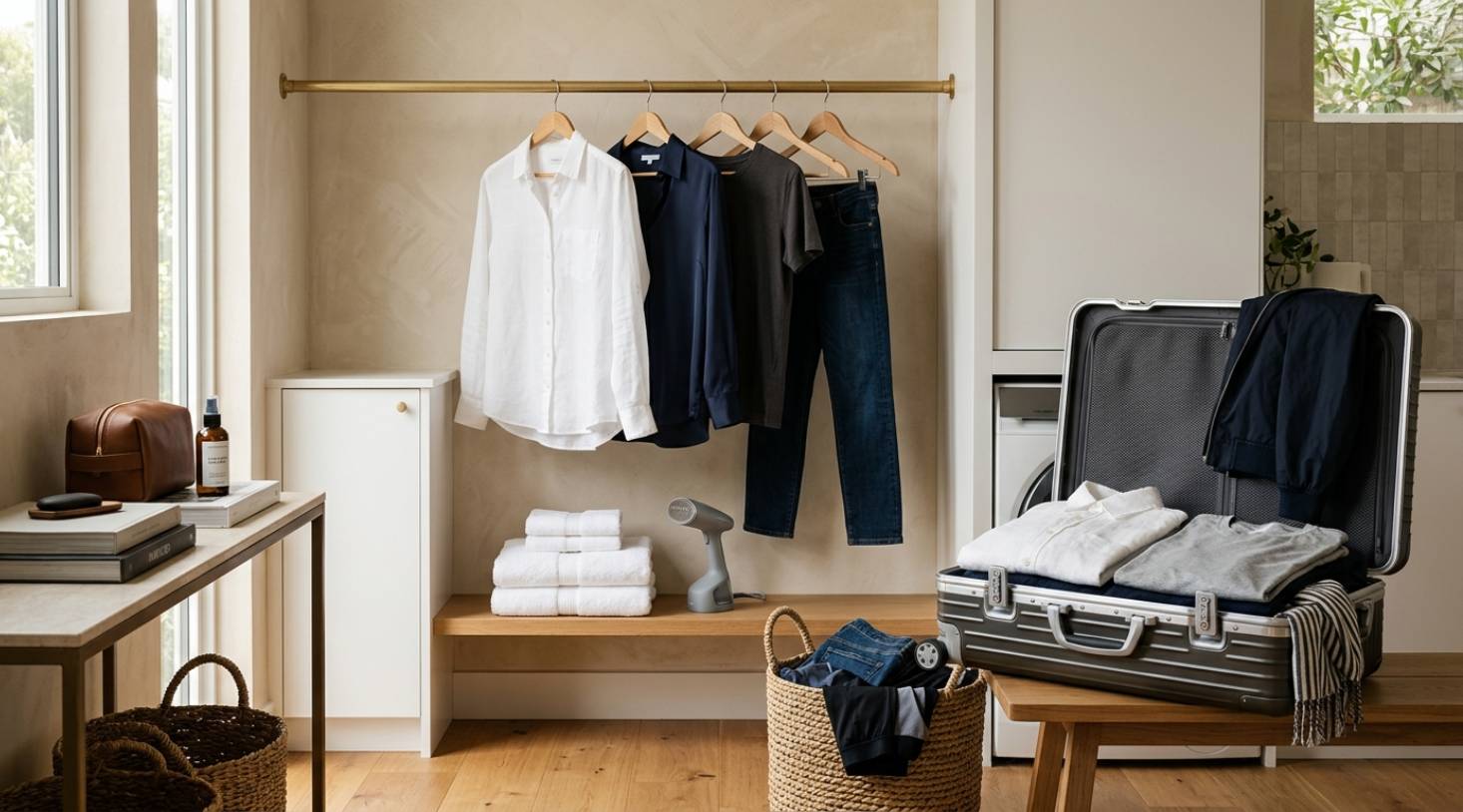
Travel is enriching, but it can be tough on your wardrobe. From airport seats and fluctuating climates to sweat, pollution, and extended wear, travel-worn clothing often returns home stretched, wrinkled, odor-packed, or dulled. Proper laundry care after a trip is essential not just for hygiene but also to restore comfort, extend garment life, and prevent long-term fabric damage.
Here’s how to give your clothes the post-trip refresh they deserve.
Sort Your Laundry by “Travel Damage,” Not Just Color
Instead of relying solely on the traditional light-vs-dark sorting method, post-travel laundry benefits from an additional layer of categorization based on how items were used during your trip.
Odor-Heavy Items
Think gym clothes, socks, undergarments, and anything worn during hiking or hot-weather days. These require:
- Pre-soaking
- Odor-targeting detergents
- Lower heat drying to protect stretch fabrics
Wrinkled but Low-Soil Clothing
Office outfits, travel-day outfits, and linen pieces often fall here. They don’t need heavy washing—gentle cycles prevent premature wear.
Stained or Spilled-On Items
Food stains, sunscreen residue, makeup marks, and sweat patches need closer attention with stain treatments before washing.
Delicate Fabrics
Silk tops, dresses, linen blends, and fine knits may have absorbed sweat or odors but still require mild handling.
Sorting by condition ensures each item gets the appropriate treatment, avoiding unnecessary abrasion.
Pre-Treat Sweat, Odors, and Stains Immediately
Travel intensifies odor-causing bacteria and sets stains deeper into fabric fibers.
For sweat and odor buildup
- Mix mild detergent with lukewarm water
- Soak for 30–60 minutes
- Add baking soda for extra deodorization
Synthetic athletic wear especially benefits from enzyme-based detergents designed to break down sweat residues that cling to polyester fibers.
For sunscreen and body oil stains
These yellowish patches are common after beach vacations. Use:
- A small amount of dish soap
- Gentle scrubbing with a soft brush
- Cold water rinse
Avoid hot water—it sets oil-based stains.
For food or beverage stains
Blot first, never rub. Then use a direct stain remover formulated for the fabric type.
Wash Based on Fabric Sensitivity, Not Frequency of Wear

Many travelers toss everything into the machine at once out of convenience—but this reduces garment lifespan.
Cotton and synthetics
Perfect for regular cycles, but still avoid very hot water, which weakens fibers and encourages fading.
Wool, linen, silk, and blends
Hand-wash or choose delicate cycles:
- Cold water
- Mild detergent
- Mesh laundry bags for protection
Travel often exposes delicate fabrics to sweat and wrinkling, but that doesn’t mean you need a harsh wash—gentle cleaning restores softness and structure.
Handle Denim and Outerwear with Extra Care
Denim, jackets, and outerwear accumulate bacteria and odors but don’t always need full washing.
For denim:
- Turn inside out
- Use cold water
- Avoid the dryer
- Spot-clean stains separately
Frequent washing fades color and breaks down elastane in stretch jeans.
For jackets or windbreakers:
Most only need:
- Spot cleaning
- A cold delicate wash (occasionally)
- Air drying
Down jackets require dryer balls and low heat to restore loft.
Don’t Forget Accessories: Caps, Bags, and Scarves
Travel grime often hides in accessories, yet many people overlook them post-trip.
Caps and hats
Hand-wash in cold water
Avoid machine agitation to preserve structure
Scarves
Material determines method:
- Wool/silk → hand-wash
- Cotton → gentle cycle
Bags
Wipe down interior and exterior with mild soap or fabric-safe wipes. Machine washing is usually risky unless the tag explicitly allows it.
Dry with Care: Heat Can Ruin Travel-Worn Clothes

After multiple wears, fabrics are more fragile than usual. Heat accelerates shrinkage, fading, and elasticity damage.
Best practices:
- Air dry whenever possible
- For synthetics, low-heat tumble is acceptable
- For linen and cotton, shake out wrinkles before drying
- For delicates, lay flat instead of hanging
Drying at lower temperatures helps the fabric regain shape without stress.
Restore Shape and Freshness After Drying
Once dry, some garments may need a little reshaping from being compressed in luggage.
Steam instead of iron
Steam relaxes fibers without scorching or weakening sensitive fabrics.
Use fabric sprays
Light misting can remove lingering travel odors and restore freshness.
Re-fold or hang properly
Long-term garment care starts with storage, not just washing.
Final Thoughts
Travel takes a toll on clothing, but with the right post-trip laundry strategy, you can restore freshness, protect delicate fabrics, and extend the life of your wardrobe. By sorting garments based on travel wear, treating odors early, washing with fabric sensitivity in mind, and choosing proper drying methods, your clothes stay looking and feeling their best long after your trip ends.
