


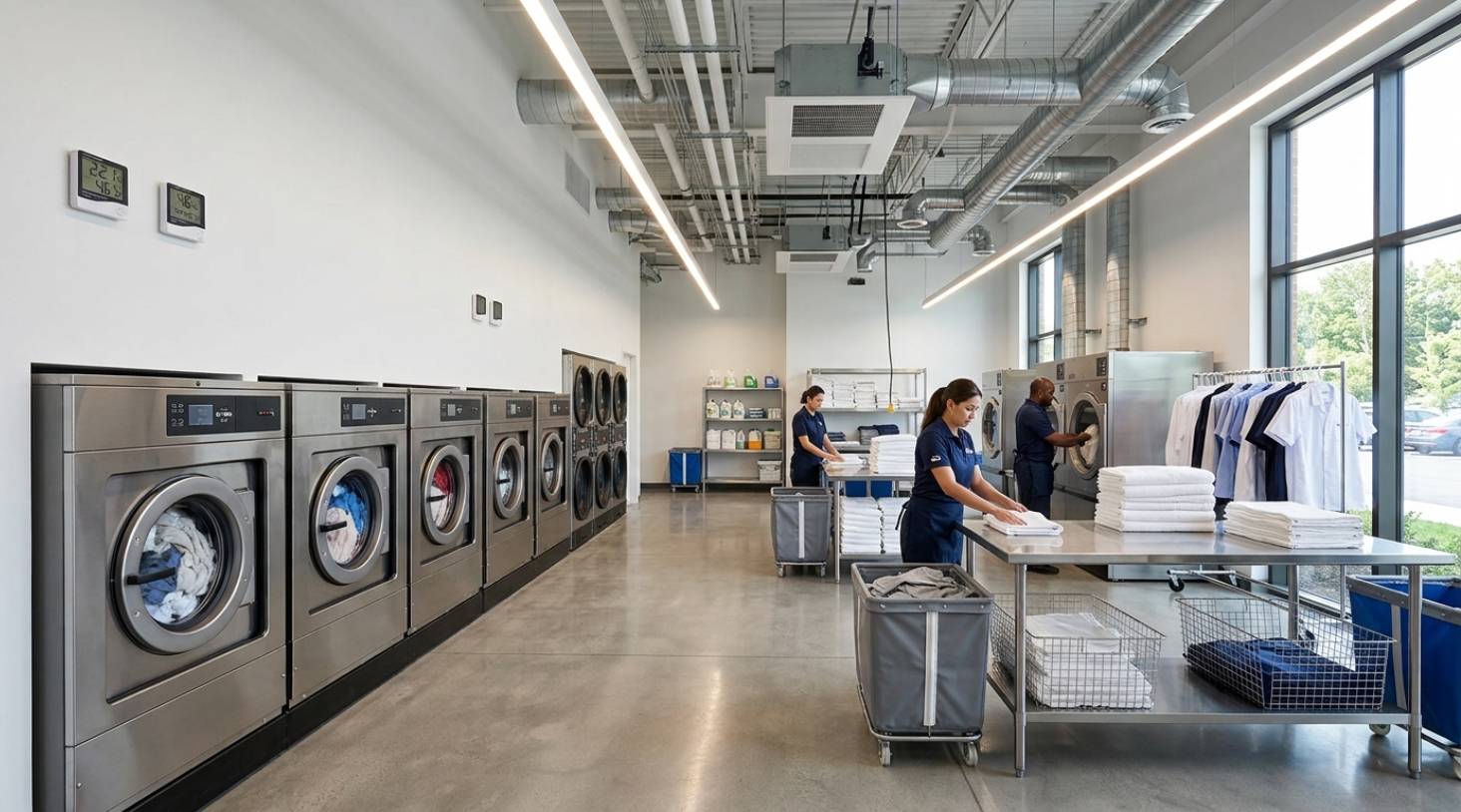
Climate-controlled laundry facilities are designed to maintain consistent temperature and humidity levels throughout the laundry process. These facilities use advanced environmental controls to create optimal conditions for washing, drying, and storing garments. By managing the climate, they reduce risks associated with extreme temperatures, excessive moisture, or poor ventilation, which can negatively affect fabrics.
The Impact of Temperature on Laundry
Temperature plays a critical role in fabric care and cleaning efficiency:
- Washing: Maintaining the correct water temperature ensures detergents work effectively, removing dirt and oils without damaging fibers.
- Drying: Controlled heat prevents overdrying, which can shrink or weaken fabrics.
- Storage: Garments kept at stable temperatures avoid degradation, discoloration, and mold growth.
Climate control ensures fabrics are treated in ideal conditions from start to finish, enhancing both cleanliness and longevity.
Humidity Control and Fabric Preservation
Excess humidity can cause serious laundry issues:
- Mold and Mildew: Damp conditions promote microbial growth, leading to odors and potential fabric damage.
- Wrinkling: High humidity can increase wrinkles, making ironing more challenging.
- Fabric Weakening: Constant exposure to moisture may degrade fibers over time.
By controlling humidity levels, climate-controlled facilities prevent these problems, keeping garments in pristine condition.
Benefits for Professional and Home Laundry

- Consistent Cleaning Results: Stable environmental conditions ensure detergents, water, and machines perform optimally.
- Fabric Protection: Delicate fabrics, wool, silk, and synthetics are less likely to shrink, stretch, or fade.
- Reduced Odors: Proper ventilation and humidity control prevent musty smells in stored or processed clothes.
- Extended Garment Lifespan: Controlled conditions reduce stress on fibers, preserving texture, color, and shape.
- Efficiency: Predictable conditions allow for faster drying and reduced energy consumption compared to fluctuating home environments.
Climate-Controlled Storage for Laundry
In addition to washing and drying, climate-controlled storage plays a key role:
- Garments remain protected from fluctuating temperatures and dampness.
- Seasonal or long-term storage is safer for delicate items, reducing the need for frequent replacements.
- Maintaining a stable environment minimizes the risk of damage from pests, mold, or mildew.
Practical Takeaways for Home Laundry

While professional facilities have advanced controls, homeowners can adopt some climate-conscious practices:
- Store clothes in cool, dry areas with good ventilation.
- Avoid leaving laundry in humid bathrooms or laundry rooms.
- Use dehumidifiers or air conditioning during damp seasons to maintain fabric quality.
- Wash and dry garments promptly to prevent moisture buildup.
These steps mimic some benefits of climate-controlled facilities, helping maintain garment quality at home.
Conclusion: Optimal Environment, Optimal Laundry
Climate-controlled laundry facilities demonstrate how environment affects cleaning outcomes. By managing temperature, humidity, and ventilation, they protect fabrics, enhance detergent efficiency, and extend garment lifespan. Understanding these principles helps both professionals and homeowners improve laundry results, ensuring clothes stay clean, fresh, and well-preserved.
