

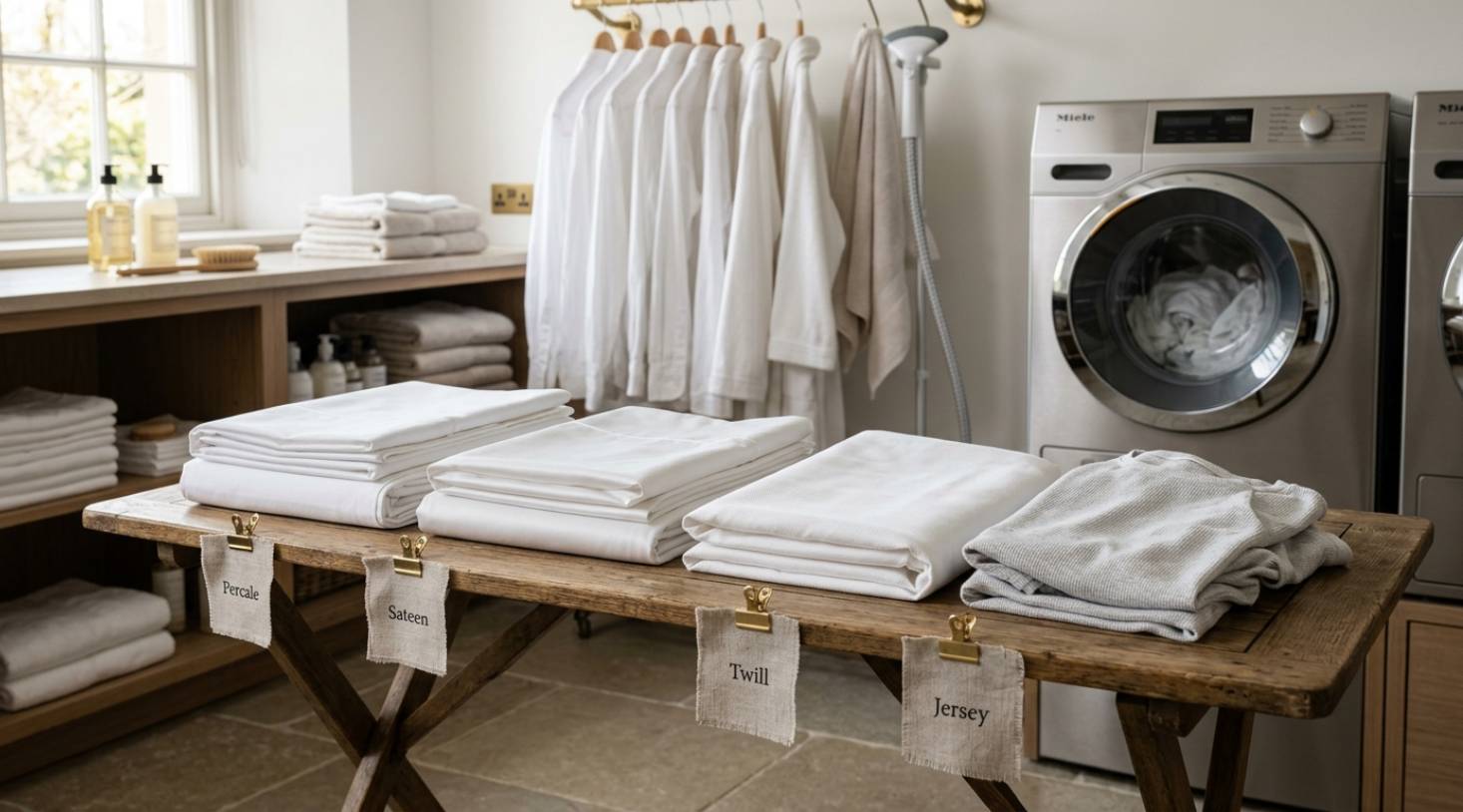
When it comes to proper laundry care, most people focus on detergent, temperature, and machine settings. But behind every high-quality garment or sheet is an essential trio that directly affects how well your items survive wash after wash: thread count, weave, and fabric sensitivity. Understanding these elements doesn’t just improve cleaning results—it also extends fabric lifespan, maintains softness, and prevents damage that often seems “mysterious” after multiple washes.
Below, we break down how these textile fundamentals influence your laundry strategy and what you should adjust to keep every piece looking and feeling its best.
What Thread Count Really Means in Laundry
Thread count refers to the number of threads woven into one square inch of fabric—typically used in bedding but also relevant for shirts, dresses, and fine garments. While many consumers assume higher is always better, that’s not entirely true when it comes to laundry performance.
High Thread Count (400+)
- Softer, denser, and heavier
- More prone to retaining moisture, meaning longer drying times
- Requires gentle washing to prevent fiber stress
- Can develop pilling if overwashed or dried on high heat
High thread count fabrics are less tolerant of intense agitation because tightly packed fibers can break more easily. Gentle or delicate cycles help maintain the smooth surface and luxurious feel of these fabrics.
Medium Thread Count (200–400)
- Balanced durability and softness
- Suitable for regular washing
- Less prone to shrinkage and fiber breakage
These fabrics handle frequent laundering better but still benefit from warm or cool water rather than high heat.
Low Thread Count (<200)
- Lightweight and breathable
- More prone to wear and tear
- Best washed in mild settings to avoid thinning
Low thread count doesn’t automatically mean poor quality, but it does mean the fabric’s structure is more vulnerable to damage from rough washing.
Why Weave Patterns Matter in Laundry
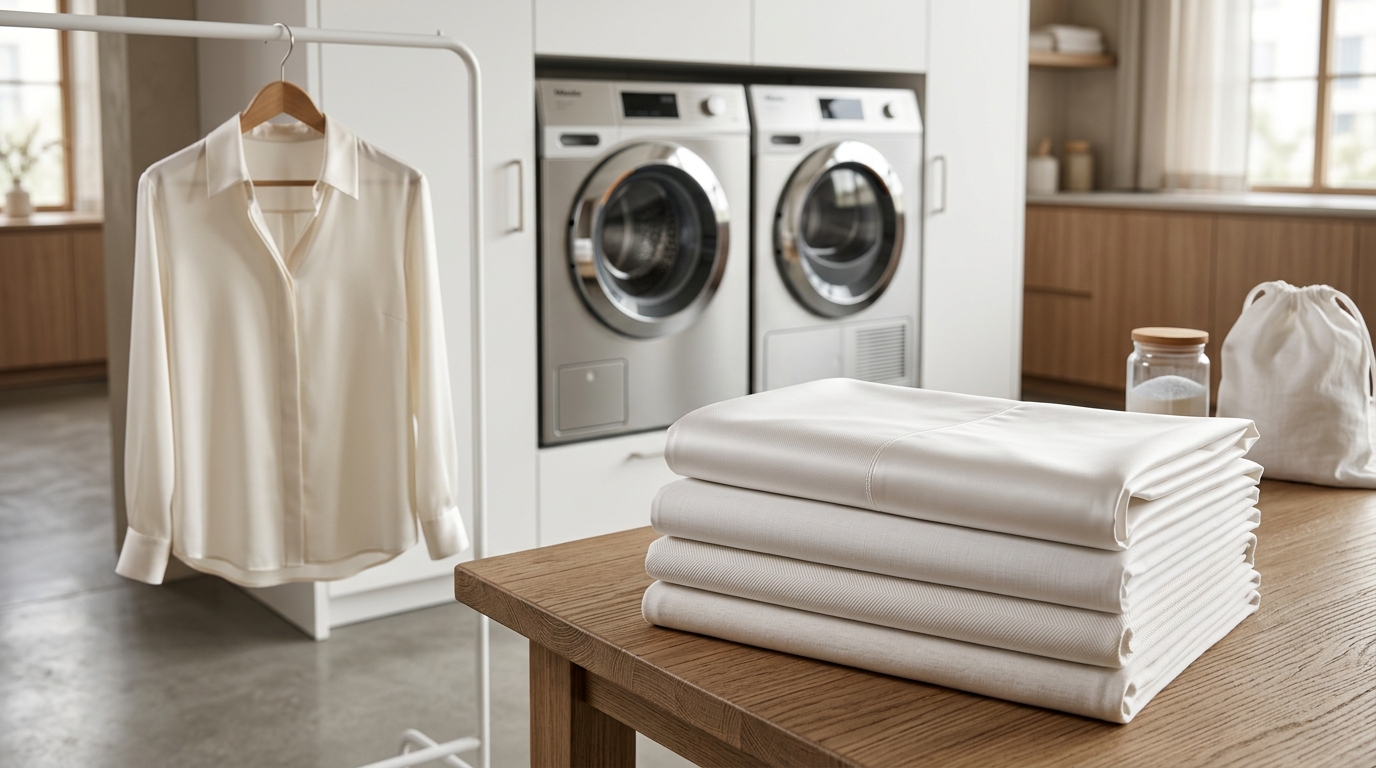
The weave pattern determines how the threads are arranged. This affects not just texture but also how fabrics behave when washed, dried, or ironed.
1. Percale Weave
- Crisp, matte, tightly woven
- Resists pilling and retains shape
- Can wrinkle easily in the wash
- Wash in warm water and dry on low to minimize creasing
Percale sheets and garments benefit from removing early from the dryer to reduce wrinkles.
2. Sateen Weave
- Smooth, lustrous, silk-like appearance
- More delicate due to longer surface threads
- Prone to snagging and dullness when overwashed
- Best washed on gentle cycles with mild detergents
Because sateen exposes more surface threads, abrasion from rough cycles or over-drying quickly degrades its sheen.
3. Twill Weave
- Diagonal rib pattern (often in denim, khakis)
- Strong and durable
- Excellent at resisting stains and wrinkles
- Withstands frequent washing
Twill items are among the easiest fabrics to maintain, but still benefit from temperature control to prevent fading.
4. Jersey Knit
- Stretchy, soft, often used for t-shirts and bedding
- Prone to stretching out or misshaping
- Wash cold and avoid high heat drying
Knit fabrics react poorly to hot water and strong agitation, which can distort elasticity.
Fabric Sensitivity: The Hidden Variable in Laundry Damage
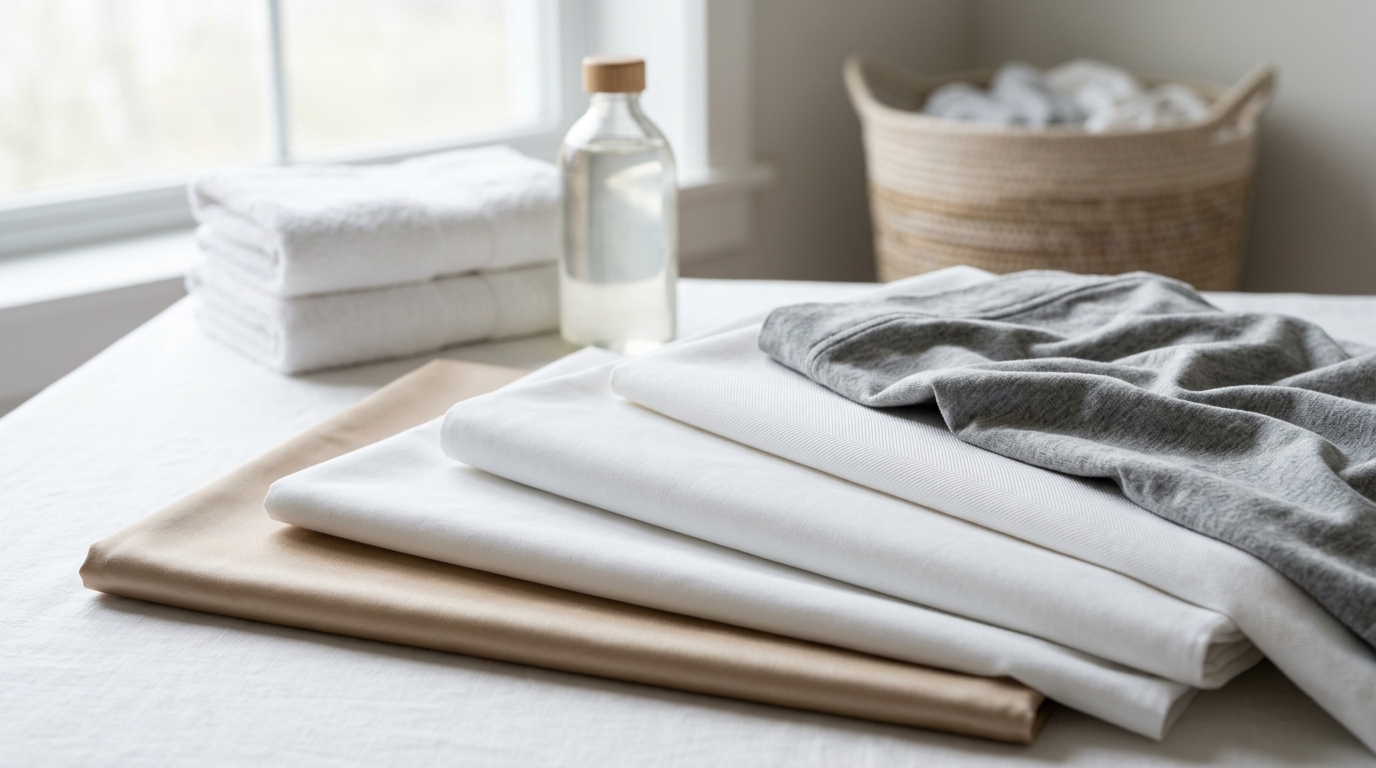
Some materials naturally require more care. Understanding sensitivity helps prevent unintended thinning, fading, or fiber breakdown.
Sensitive Fabrics
- Silk
- Wool
- Cashmere
- Rayon
- Modal
- Linen (depending on weave)
These fabrics often:
- Shrink in hot water
- Distort under high agitation
- Weaken with harsh detergents
- Lose color faster
Care instructions for sensitive fabrics usually recommend:
- Cold water
- Gentle cycles or handwashing
- Air-drying instead of machine drying
- Using fabric-specific detergents
Less Sensitive Fabrics
- Cotton
- Polyester
- Nylon
- Blends
Even though these fabrics tolerate more aggressive washing, long-term care still benefits from cool water and lower heat to avoid fiber fatigue.
Matching Laundry Methods to Material Science
Understanding thread count, weave, and sensitivity allows you to tailor your laundry approach:
- High thread count + sateen = gentle wash, low heat
- Low thread count + twill weave = standard wash OK
- Knit materials = cold water + minimal agitation
- Sensitive fabrics = cold wash + air dry
- Dense weaves (like percale) = warm wash + low dry to reduce wrinkling
Small adjustments like these significantly enhance fabric longevity.
Final Thoughts
Laundry isn’t just about cleaning—it’s about preserving the structural integrity and comfort of your garments and linens. By understanding how thread count, weave patterns, and fabric sensitivity affect washing outcomes, you can prevent common issues like pilling, shrinking, fading, and texture loss. A little fabric knowledge goes a long way in protecting your wardrobe and extending the life of every textile you care for.
