


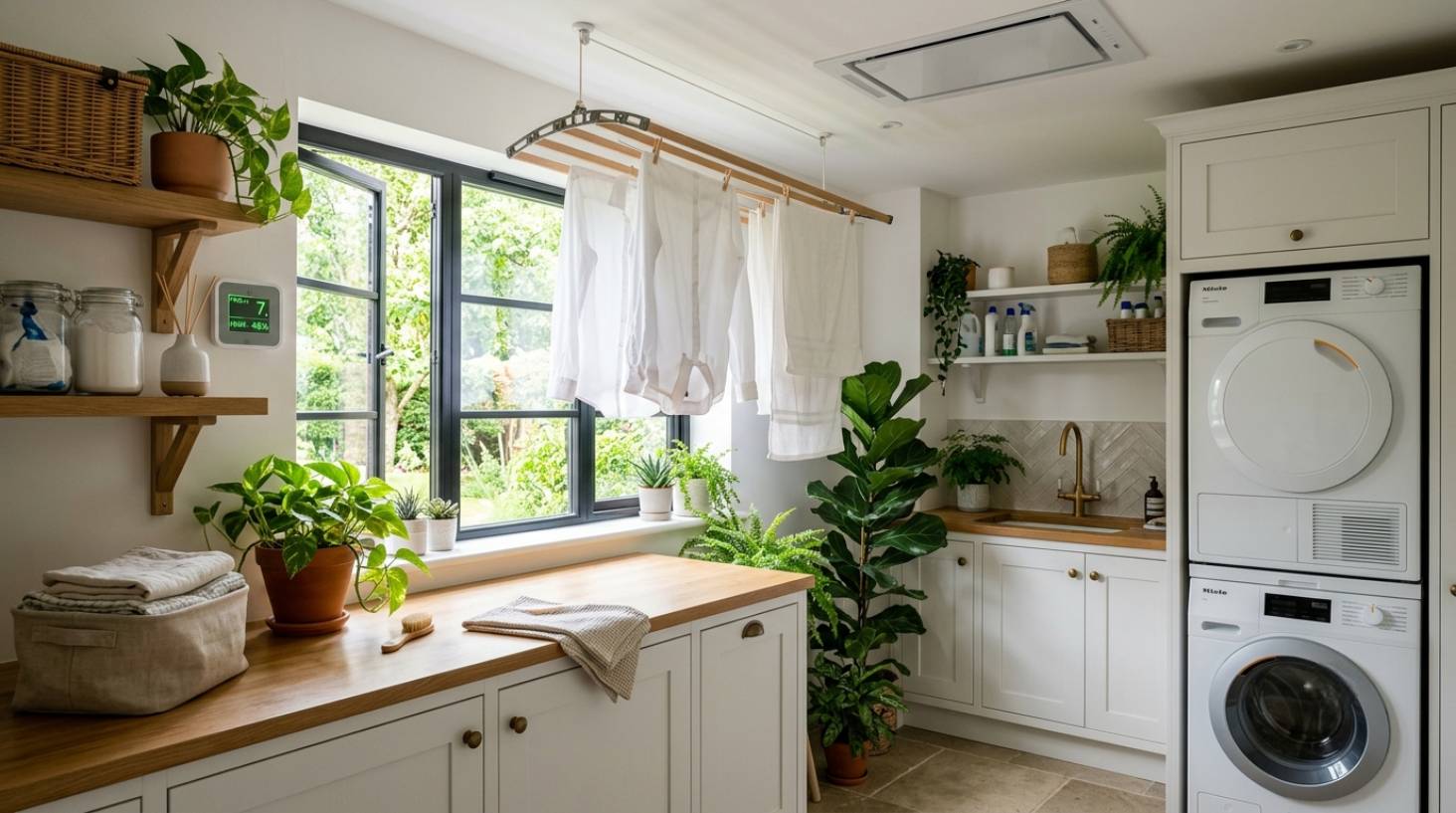
Laundry doesn’t just clean your clothes—it can affect the air you breathe at home. Drying clothes indoors, using harsh detergents, or neglecting ventilation can introduce moisture, allergens, and chemical residues into indoor air.
Understanding this connection is key to maintaining a healthy living environment while keeping clothes fresh and clean.
Moisture and Indoor Air Quality
- Indoor Drying: Hanging damp clothes inside increases humidity, which can lead to mold, mildew, and dust mites.
- Health Risks: Elevated humidity levels may trigger allergies, asthma, and respiratory irritation.
- Solution: Use well-ventilated spaces or mechanical dryers with proper venting to minimize moisture buildup.
Proper drying practices are crucial for both fabric preservation and air quality.
Detergents, Fabric Softeners, and Chemicals
- Volatile Organic Compounds (VOCs): Some detergents and softeners release chemical fumes that can linger indoors.
- Fragrance Sensitivity: Strong scents may irritate sensitive individuals or exacerbate allergic reactions.
- Solution: Opt for fragrance-free or low-VOC detergents and rinse thoroughly to reduce residue on clothing.
Minimizing chemical exposure ensures clean clothes without compromising indoor air quality.
Laundry Equipment and Ventilation
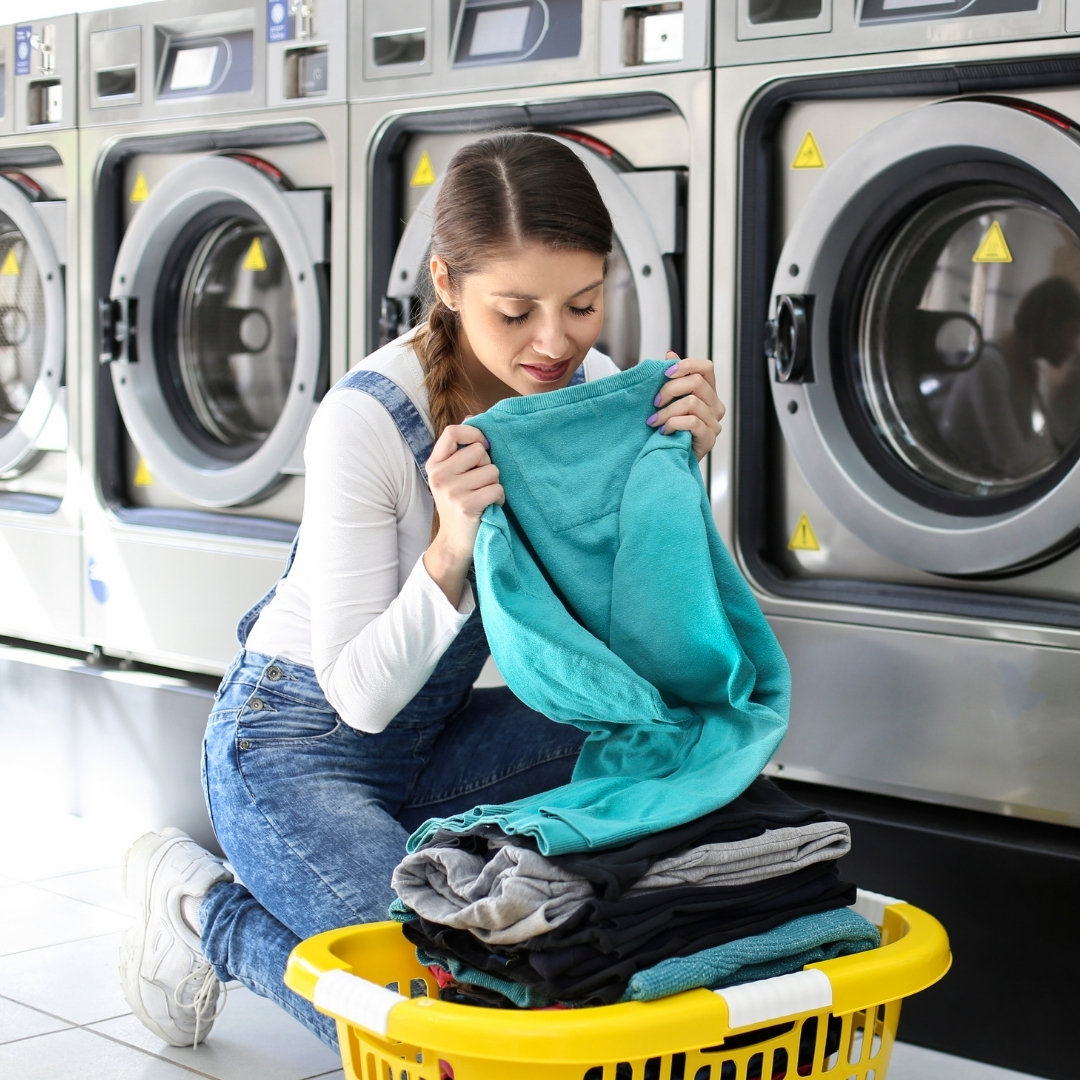
- Tumble Dryers: Ensure proper venting to the outdoors to avoid trapping heat and moisture inside.
- Washing Machines: Front-loaders are prone to mold in seals if not regularly cleaned.
- Ventilation: Always maintain good airflow in laundry areas, using fans, open windows, or exhaust systems.
Well-ventilated laundry spaces protect both your home and your garments.
Fabrics and Drying Choices
- Natural Fibers: Cotton, linen, and wool retain more moisture; indoor drying may increase humidity.
- Synthetic Fibers: Dry faster, reducing indoor moisture but can trap static and odors.
- Drying Outdoors: Sunlight not only dries clothes but also reduces microbial growth and naturally freshens fabrics.
Choosing the right drying method impacts both clothing longevity and indoor air health.
Preventing Mold and Musty Odors
- Quick Turnaround: Avoid leaving wet laundry sitting for long periods indoors.
- Dehumidifiers: Use to control humidity if indoor drying is unavoidable.
- Regular Cleaning: Clean washing machines, lint traps, and drying racks to prevent mold accumulation.
These steps reduce the risk of musty odors and air quality issues.
Laundry Habits for a Healthier Home
- Separate laundry spaces from living areas to limit moisture spread.
- Use cold or warm water washes to reduce steam production indoors.
- Ensure garments are completely dry before storing to prevent microbial growth.
- Choose environmentally friendly detergents to reduce chemical residues in air.
- Rotate indoor drying locations to prevent moisture accumulation in one area.
Adopting mindful habits keeps both clothes and indoor air clean.
Environmental and Health Benefits
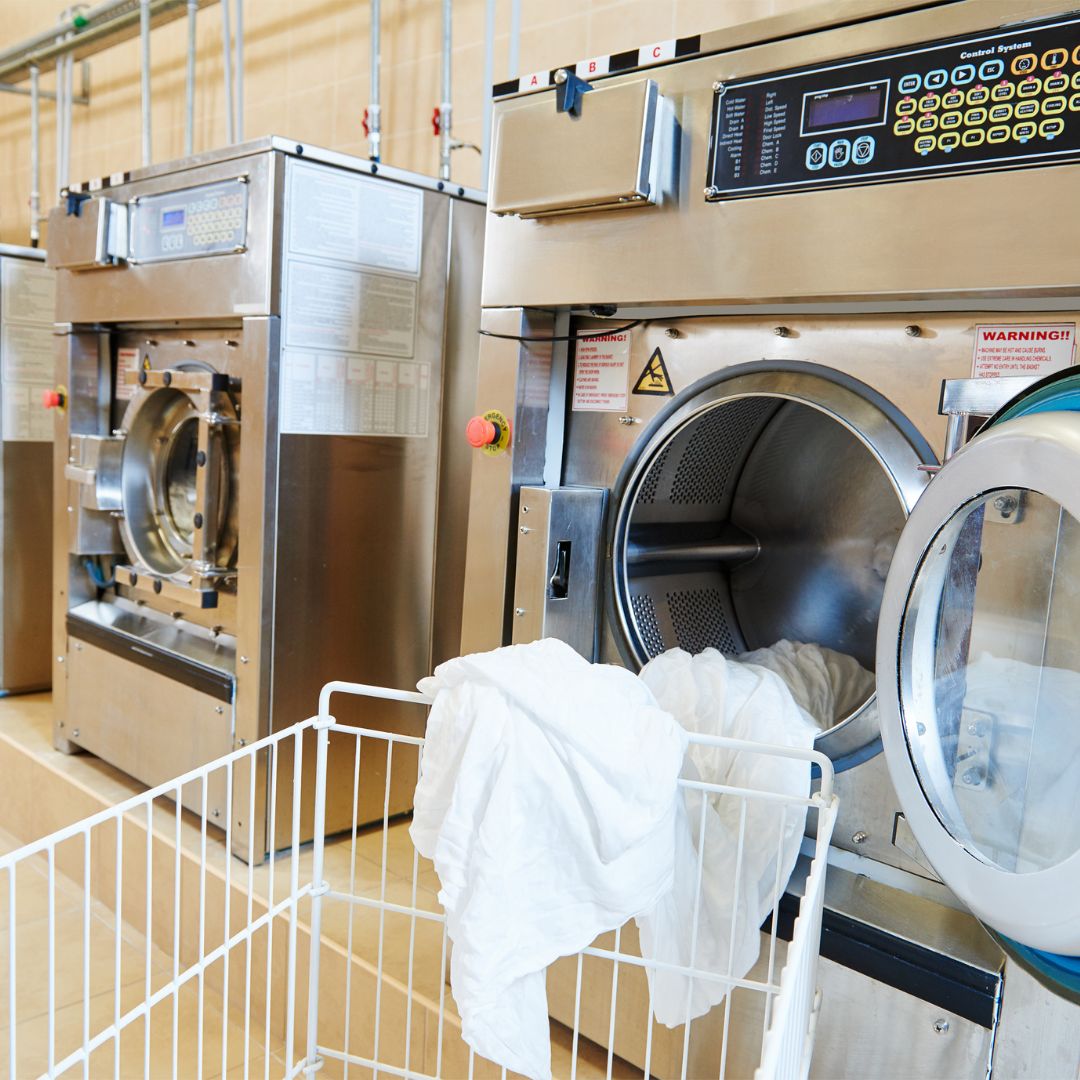
- Proper laundry care contributes to better indoor air quality, reducing allergens and irritants.
- Efficient drying methods and low-chemical detergents support sustainable, eco-friendly living.
- Maintaining a clean, dry laundry environment protects both your health and your wardrobe investment.
Healthy laundry practices are a win-win for home and personal wellness.
Laundry as Part of Indoor Air Care
Laundry is more than a chore—it’s a factor in your home’s air quality.
To protect both your health and your clothes:
- Dry clothes in well-ventilated areas or outdoors
- Minimize chemical residues by choosing fragrance-free detergents
- Prevent mold through timely drying and machine cleaning
- Monitor humidity levels to maintain a comfortable, healthy indoor environment
By integrating these habits, you can enjoy fresh, clean clothes while supporting a healthier home environment.
